| Peter,
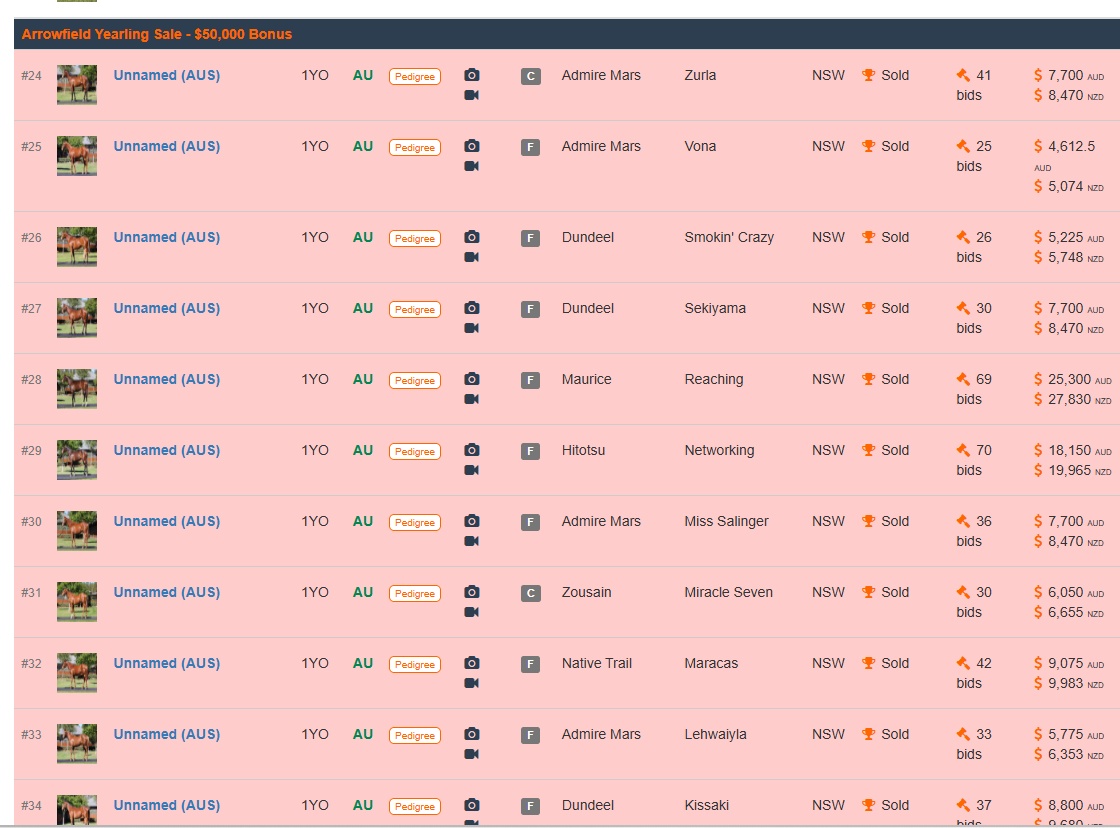
When is someone going to seriously investigate Bloodstock Auction especially the sale ending today and the possibility of shill bidding? I’ve watched some extremely questionable bidding patterns, particularly involving the Arrowfield sales, and I cannot understand why nobody is looking into it.
This isn’t the first time concerns have been raised. During a previous Arrowfield unreserved auction, final bids and sale prices weren’t publicly disclosed after the auction. All six horses were initially reported as sold, yet the following week, four of those six appeared online for sale again. How does that happen in an unreserved auction without raising serious questions?
Now we’re seeing another Arrowfield promotion offering $50,000 in bonuses, and the economics alone warrant scrutiny. Even assuming Bloodstock Auction and Arrowfield split that promotional expense equally:
* 15 horses × $385 listing fee = $5,775
* Estimated sale aggregate of $250,000
* 5% commission = $12,500
* Total estimated revenue = $18,275
* Half the promotional bonus = $25,000
* Estimated short= $6,725
That’s before operating expenses. So what’s the commercially obvious incentive? Is Arrowfield funding the promotion independently from what I’ve seen it was marketed as a dual promotion, are there other commercial arrangements, or is something else happening?
Bidding opened Friday at approximately 2 pm, with 15 horses listed. Across multiple lots, I’ve noticed what appears to be coordinated bidding activity.
For example:
* Three separate lots received bids at approximately 5:07, 5:07 and 5:08 pm.
* Another two lots received bids at approximately 5:14 and 5:15 pm.
* Another two lots received bids at exactly 2:28 pm.
These weren’t bids late in an auction. In all cases, they appeared to be the first bids placed on those lots, hours after bidding opened. The patterns suggest the possibility of accounts being used across groups of horses to generate bidding activity. That doesn’t prove wrongdoing, and you cannot as an outsider but surely it’s enough to warrant examining the bidder identities and account histories.
An auction platform potentially has access to information ordinary buyers don’t, including maximum bids, bidding histories, account activity and previous purchasing behaviour. If someone associated with the platform or vendor were using that information to influence bidding, it would be an extremely serious matter.
And it’s the smaller owners who are potentially paying the price.
Look at the last three auctions. By my calculations, approximately 80% of horses have been passed in, with only 10–15 selling from roughly 60 listings.
Yet owners continue paying $385 per listing, regardless of whether their horse attracts genuine interest or sells.
Meanwhile, the company continues aggressively marketing itself against other established bloodstock sales businesses.
I’m not suggesting that matching timestamps alone prove shill bidding. But when you combine the unusual bidding patterns, previously reported sales reappearing for sale, undisclosed results and the commercial arrangements surrounding these promotions, surely there are enough questions to justify an independent investigation.
Why can’t the relevant regulator request the auction platform’s bidder records, verify the identities behind the accounts and establish whether the bids were genuine, independent offers?
If everything is legitimate, an independent examination should help establish that.
But if bidding is being artificially influenced, genuine buyers could be paying inflated prices while smaller vendors are paying listing fees to participate in a marketplace that isn’t operating fairly.
I’ve been watching these auctions closely, and I believe the patterns deserve far more scrutiny than they’re receiving.
I’d be interested to see someone with your platform, knowledge and awareness investigate this properly.
Giles from Gosford |